


How Do Police Determine Fault After a Fatal Motorcycle Accident in Brooklyn?
Fatal motorcycle accidents in Brooklyn are all too common, especially during the summer months. If you lost a loved one in a fatal motorcycle accident, contact Cohan Law, PLLC for real answers. Our Brooklyn motorcycle accident attorney can review the police investigation, conduct an independent investigation, and determine whether a driver, vehicle owner, roadway contractor, government entity, or other party may be legally responsible.
Fatal motorcycle crashes in Brooklyn often happen on fast-moving or high-conflict corridors such as the Brooklyn-Queens Expressway, the Belt Parkway, Atlantic Avenue, Eastern Parkway, Ocean Parkway, Flatbush Avenue, and busy intersections where motorcycles, cars, trucks, buses, delivery vehicles, and pedestrians all share limited space. The roadway itself can make the fault analysis more complicated.
Tire Marks
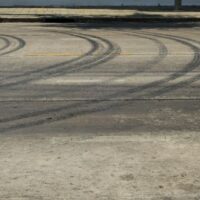
Tire marks at the scene of a fatal motorcycle accident can tell investigators various things. First, tire marks can help investigators determine how fast motorcycles were traveling moments before they crashed. They can also help determine how fast other vehicles were traveling moments before crashes. If tire marks indicate that another vehicle was speeding while a motorcyclist was traveling under the limit, this could indicate that the motorcyclist was not to blame.
Tire marks can also show whether a specific driver even attempted to apply the brakes. If a driver never even applied the brakes before smashing into a motorcyclist, this strongly indicates that they were distracted. Skid marks, yaw marks, gouge marks, debris fields, fluid trails, final resting positions, and vehicle damage patterns can all help reconstruct what happened. On corridors such as the BQE, Belt Parkway, and Atlantic Avenue, this evidence may help show whether another driver changed lanes unsafely, followed too closely, turned across the motorcycle, or failed to react in time.
Witness Testimony
Witness testimony represents some of the strongest evidence. Crash scene investigators often question everyone at the scene of a motorcycle crash as they gather as much information as possible. On busy streets, someone is bound to have seen exactly what caused the crash. Witnesses don’t always agree, however.
On less busy roads, witness testimony can be less reliable. The time of the crash is also important, and late-night or early-morning motorcycle crashes are more likely to occur without any witnesses. Of course, hit-and-runs may also leave no witnesses behind.
Video Footage
It is difficult to argue with video footage of a crash. Traffic cameras, security surveillance cameras, and dashcams can all provide investigators with plenty of information as they determine who or what caused a crash. However, video footage isn’t always available. While traffic cameras might exist at certain intersections, they may only “trigger” and start recording under specific circumstances.
In Brooklyn, useful video may come from MTA buses, commercial storefronts, apartment buildings, gas stations, delivery vehicles, dashcams, NYPD cameras, traffic cameras, or private security systems along the crash route. The problem is that much of this footage may be overwritten quickly. Cohan Law can send preservation demands, investigate camera locations, and work to obtain footage before it disappears.
Police Accident Reports and Collision Reconstruction
Fatal and critical injury crashes in New York City may be investigated by the NYPD. Among other things, the responding officers may examine the scene, interview witnesses, inspect vehicles, document road conditions, review video, and prepare reports. In some cases, specialized collision reconstruction analysis may be used to estimate speed, angle of impact, braking, visibility, and sequence of events. However, a police report is not the final word on civil fault. It may contain useful facts, but it may also be incomplete.
Investigators May Miss Details
Although no one is doubting the professionalism of law enforcement in New York, investigators and personal injury attorneys have different priorities when assessing motorcycle crashes. Law enforcement thinks in terms of criminal justice, while personal injury lawyers think in terms of civil liability. Because of these diverging priorities, a personal injury lawyer may pick up details that investigators miss.
Key Takeaways
- Investigators use various techniques to determine fault after a fatal motorcycle accident
- Evidence may include tire marks, witness testimony, and video footage
- Investigators don’t always “get it right,” and a personal injury lawyer can provide a second set of eyes
Can a Motorcycle Accident Lawyer in Brooklyn Help Me?
If you have lost a loved one to a fatal motorcycle accident in Brooklyn, consider speaking with an experienced motorcycle accident attorney for further guidance. While crash scene investigators are very good at what they do, sometimes a second set of eyes helps. Mourning the loss of a loved one after a fatal motorcycle accident? Contact our Brooklyn motorcycle accident lawyers at Cohan Law, PLLC today to discuss your options during a free consultation.
Sources:
- nyc.gov/site/nypd/services/vehicles-property/faq-for-critical-fatal-injury-collisions.page
- troopers.ny.gov/collision-reconstruction